
Reflections On American Celebration Culture, African Parenting, And A Tale Of Two Worlds
By Dr. Ope Banwo
The Mayor of Fadeyi
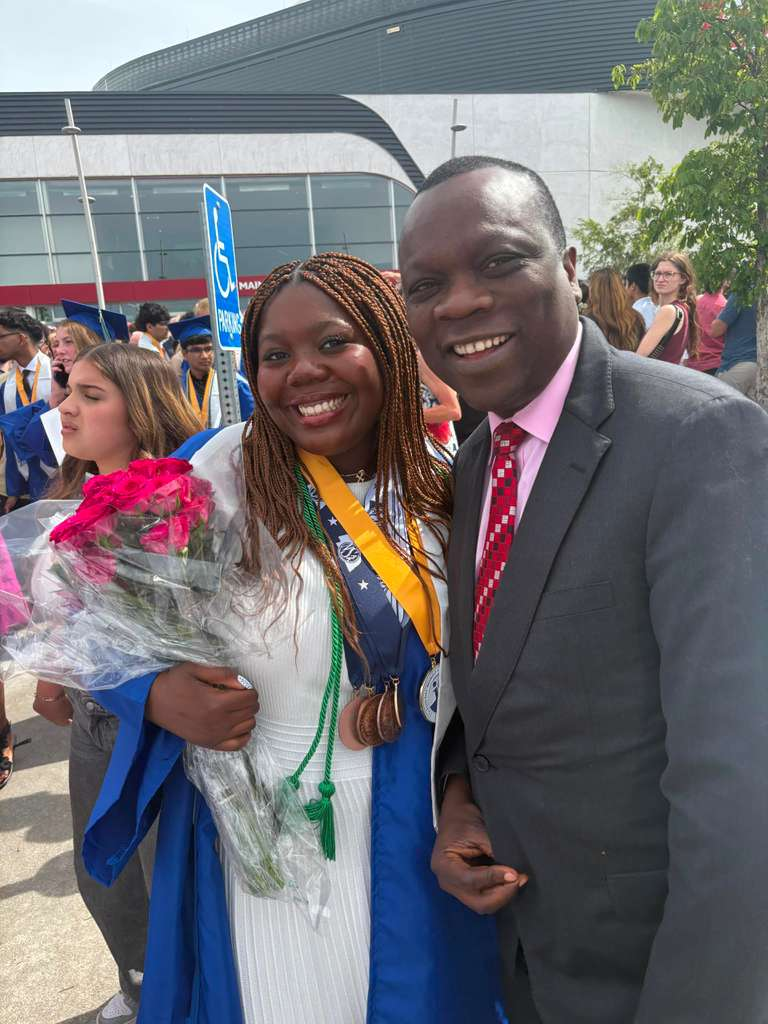
Today, I sat in a huge American graduation hall watching my daughter, Harmony Kikelomo Banwo, graduate from high school.
And somewhere between the loud applause, emotional speeches, camera flashes, flower bouquets, proud parents, and enough decorations to launch a presidential campaign, my Nigerian brain quietly started malfunctioning.
Don’t get me wrong. The ceremony was beautiful. Very beautiful.
My daughter literally killed it. Throughout her high school career, she collected over 60 medals for different academic and extracurricular activities in four years. So I am fiercely proud of her secondary school career.
In fact, during the ceremonies, there were moments I caught myself getting emotional too. Watching your child walk confidently across a stage while hundreds of people clap for them does something to a parent’s heart. You suddenly start seeing flashes of when they were little children running around the house, asking impossible questions and scattering your sanity.
But still…
The African man inside me kept whispering: “Ope… this is still secondary school o.”
And honestly, that single thought opened up one of the funniest cultural conversations in my head.
Because there may be no better example of the difference between American culture and African culture than how both societies treat high school graduation.
In America, high school graduation is treated like a national achievement.
People travel across states to attend.
Entire families show up color-coordinated.
Grandmothers cry.
Fathers suddenly become filmmakers with giant iPhones blocking everybody’s view.
Professional photographers are everywhere shouting: “Smile! Smile! One more pose!”
Some parents rent limousines. Some organize after-parties. Some spend enough money on graduation celebrations to almost start another inflation crisis.
Meanwhile, if this same thing happened in Nigeria during our time, many fathers would simply inspect your result sheet like military officers reviewing battle casualties.
Then say: “Well done. So when are you writing JAMB?”
End of ceremony. Go and wash plates.
No balloons. No orchestra music. No emotional speeches.
Certainly no giant customized cake some lucky kids now get with: “WE ARE SO PROUD OF YOU!”
In many Nigerian homes back then, if you celebrated secondary school graduation too much, your parents might start looking at you suspiciously: “Why is this boy smiling like this? Is this boy alright? Celebrating ordinary secondary school like he has become a professor overnight?”.. then they will add a very long “Shior!” to punctuate their disgust at your exuberance
To the average African parent of that generation, finishing high school was not considered an extraordinary achievement.
It was expected. Normal. Basic. It was like charging your phone. The real celebration was reserved for bigger victories like :
* graduating from university,
* becoming a doctor,
* building a house,
* escaping poverty,
* or finally being able to send money home from abroad.
Everything before that was rehearsal.
To be fair, African parents did not develop that mindset because they were wicked. Most of them came from hard places. They grew up in survival mode. Many of our parents studied under lanterns.
Some trekked miles to school. Some wore one pair of sandals for three years.
Some survived military governments, fuel scarcity, university strikes, economic madness, and enough hardship to make therapy permanently unemployed.
So naturally, they developed a practical mentality toward life. To them, life was war. And war does not give trophies for participation.
Nigeria itself is not built for emotional softness. NEPA does not care about your self-esteem. Lagos traffic does not reward effort. Landlords do not reduce rent because your child “tried their best.”
African children were raised to survive. American children are often raised to express themselves.
In my honest consideration, I think both cultures are trying to solve different problems.
America worries about emotional health. Africa worries about economic survival.
One culture fears low self-esteem. The other fears failure.
That difference shapes parenting in powerful ways. But sitting in that graduation hall today, I also understood something America gets very right: Americans understand the power of encouragement.
This country celebrates milestones, not just outcomes. And there is something psychologically healthy about that.
America is a society pausing to tell its young people:
“We see you.”
“We are proud of you.”
“Keep going.”
That matters. Especially in a world where so many young people are silently struggling emotionally.
In many African homes, love was often shown through sacrifice, not affirmation.
Our parents may never have said:
“I’m proud of you.” But they would sell their only plot of land, borrow money, and nearly kill themselves to pay school fees.
That was their language of love: Quiet sacrifice. Not emotional speeches.
But here is where the comedy gets even deeper. African immigrants who move to America eventually become cultural confusionists.
The same Nigerian father who once said: “Celebrate what? Is school not your responsibility?” …will now proudly organize graduation dinners for 8th-grade students.
The same African mother who once believed children should only be praised after becoming surgeons is suddenly crying while decorating cupcakes for a secondary school graduate that say: “YOU DID IT, HARMONY!”
America slowly softens people emotionally. And maybe that is not always a bad thing.
In fact, many African parents in America are unconsciously healing through their children.
They are giving the encouragement they never received. Celebrating moments nobody celebrated for them.
I remember once winning 9 awards on our awards night in high school, and nobody ever said “well done” to me. I didn’t even expect it. Other than to “buga” for my friends, that was where it ended. My dad and mom never even showed up once for any of our prize-giving days, even though I was always a multiple award winner.
In our time Nobody remembers secondary school graduation day. I don’t think we even had any celebration. You finished your final exams and went home. Finish.
All everyone cared about was who passed JAMB and who was going to university — and not just any university. It had to be one of the top schools: Great Ife, Unilag, UI, Uniben, Nsukka, and maybe Unijos before anybody smiled at you seriously.
University of Ekpoma may be great today, but in my days you were ridiculed if you ended up in the university many people considered “backup admission” instead of being celebrated.
Today, our own generation claps loudly and shouts: “Go Harmony!”; “Go Funke!” … at secondary school ceremonies our own fathers would probably have mocked, assuming they even showed up.
And honestly, that realization touched me deeply today as I watched Harmony smiling among her classmates and among her siblings all who came from all over the country to celebrate with her. Michael Banwo came from Oregon. Olufemi came from Washington DC and of course our Dr Temitope showed up complete with her husband for the GREAT even.
Then, It suddenly occurred to me that maybe these ceremonies are not really about certificates.
Maybe they are about acknowledgement and encouragement.
Maybe they are about pausing life briefly to recognize growth in our kids.
Maybe it is to celebrate transition and to say to our children: “You are becoming something beautiful.”
This is the kind of Encouragement we never got.
Still… Let us also tell ourselves the truth before Americans carry this graduation matter too far.
Some of these celebrations are becoming Olympics of exaggeration.
I wanted to tell some of them:
“My brother, calm down. It is high school graduation, not induction into the Avengers.”
Some parties now have DJs, drone cameras, luxury outfits, makeup artists, professional stage lighting, and enough food to feed a small village.
Meanwhile, some graduates still cannot boil rice without consulting YouTube tutorials. And many of those graduates never even go to university after that. High school is where they ended their formal education.
So yes… Africans sometimes under-celebrate. And Americans sometimes over-celebrate. Wisdom probably lives somewhere in the middle.
But as I sat there today watching my daughter cross that stage full of confidence and all smiles, one thing became very clear to me: Life is hard enough already.
Maybe there is nothing wrong with stopping occasionally to celebrate people we love while they are still young enough to hear it.
And perhaps that is the real beauty hidden inside all this American graduation pageantry.
Not the gowns.
Not the balloons.
Not the flowers.
Not the endless photographs. But the simple human message behind it all: “We see you. And we are proud of you.”
And honestly? In a world growing colder, harsher, lonelier, and more emotionally disconnected by the day…
Perhaps we need a little more of that.
Even if the Nigerian in me is still quietly whispering: “But this is still just secondary school sha…”
If you’re facing deportation, visa denial, marriage green card issues, or immigration delays, speak with our legal team today.
You can schedule a consultation with me here:
 SpeakWithOpe.com
Or call our office:
 888-215-5054
When you call, feel free to ask for:
Dr. Ope Banwo, Esq.
Attorney with 29 years of experience helping immigrants understand how criminal issues may affect their immigration future.
Sometimes the right legal advice at the right time can prevent small problems from becoming much larger ones.